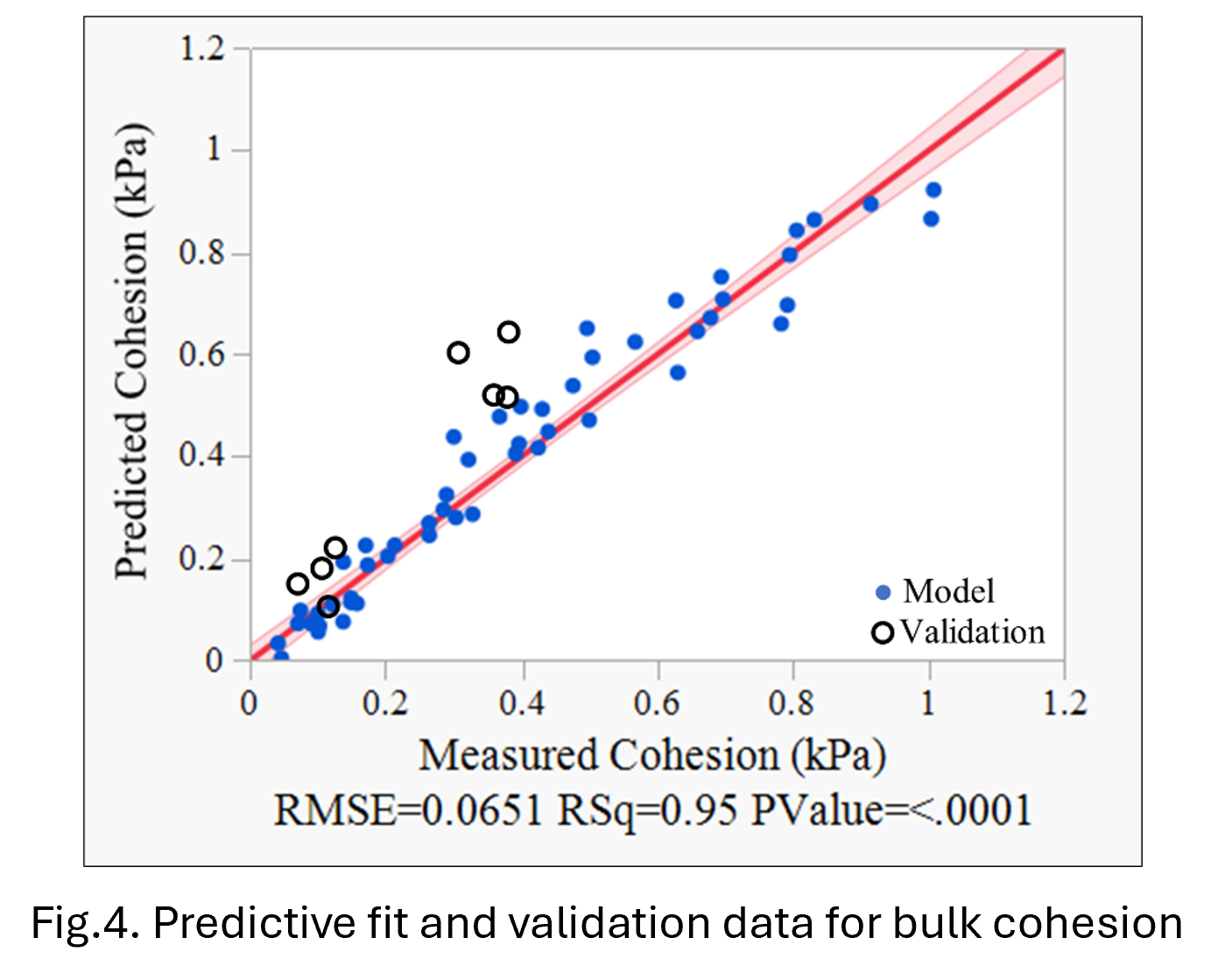
Shear properties: The Schulze ring shear tester was used to measure bulk shear properties of various anatomical tissue fractions of loblolly pine, fractionated mechanically. These tests help measure flow properties such as internal friction, bulk cohesion and stress during steady state flow. These properties are critical for design of bulk flow and storage processes and equipment. The design of experiment for the dataset provided comprises three matrices of augmented design generated using JMP statistical software, to cover the whole range of conditions across all fractions, moistures, sizes and preshear conditions.
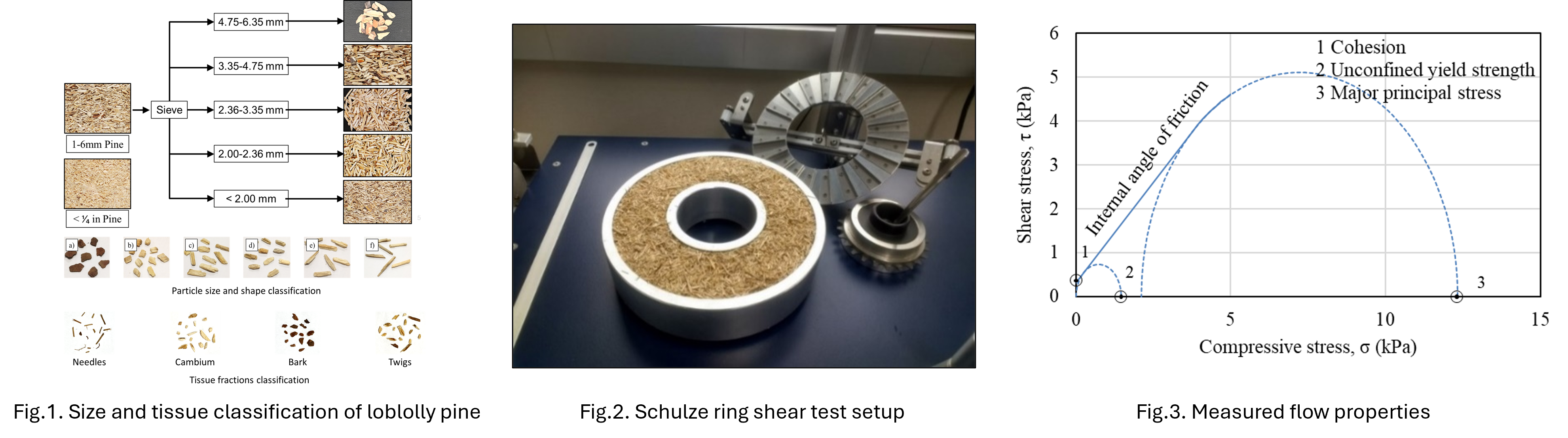
Shear properties were also measured at different particle sizes. Particle size was altered incrementally and cumulatively to capture a wide range. Exploratory regression analysis provided a prediction estimate.
Associated publications:
https://doi.org/10.3389/fenrg.2022.855289
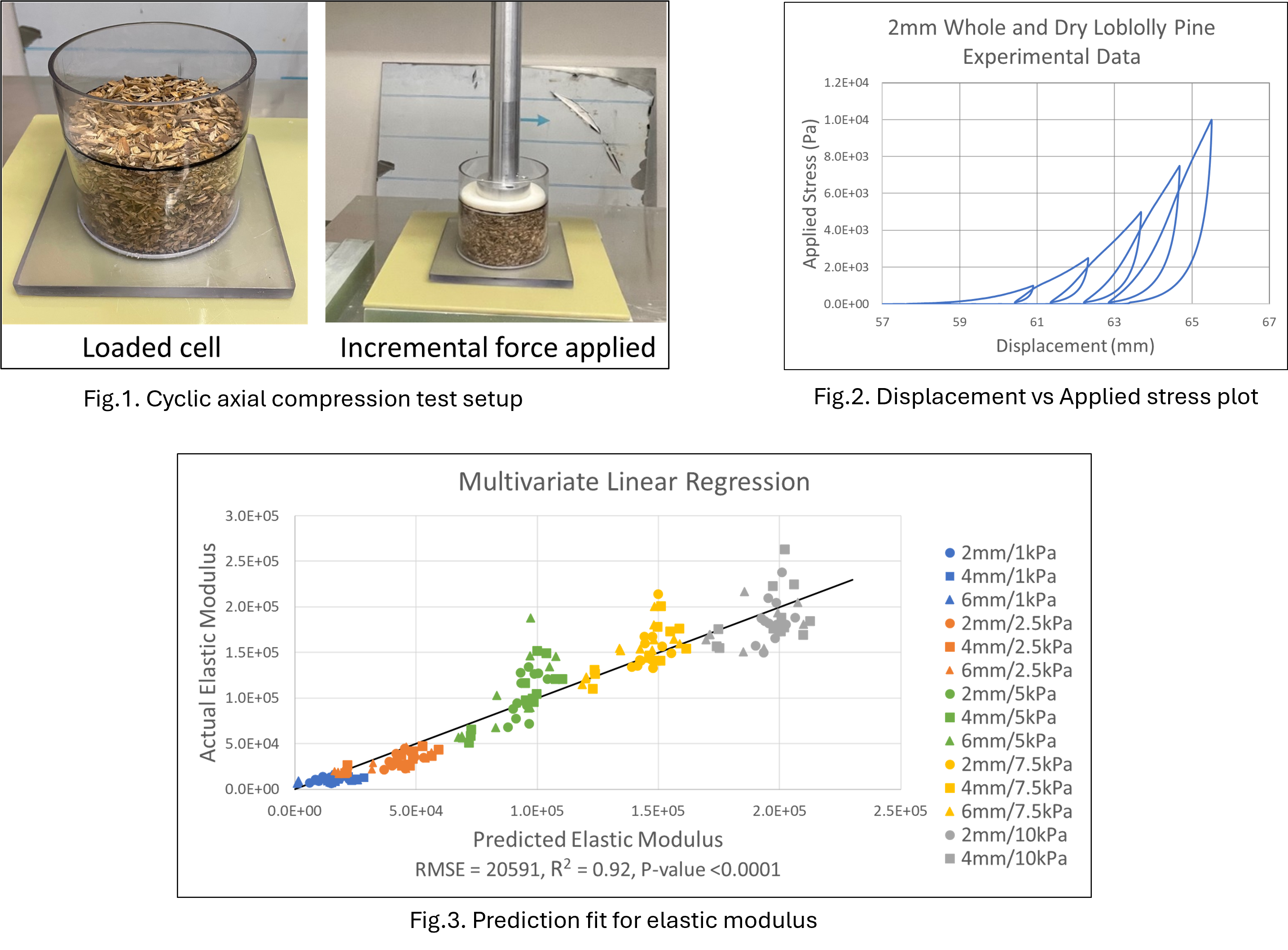
Axial compression: Axial compression tests are performed to evaluate elastic response (Elastic Modulus) of bulk particles. In this experiment, different sizes of loblolly pine particles were tested at different loading conditions. A normal load is applied to a bulk mass of material in a cylindrical container. The load is then relaxed and elastic response evaluated.
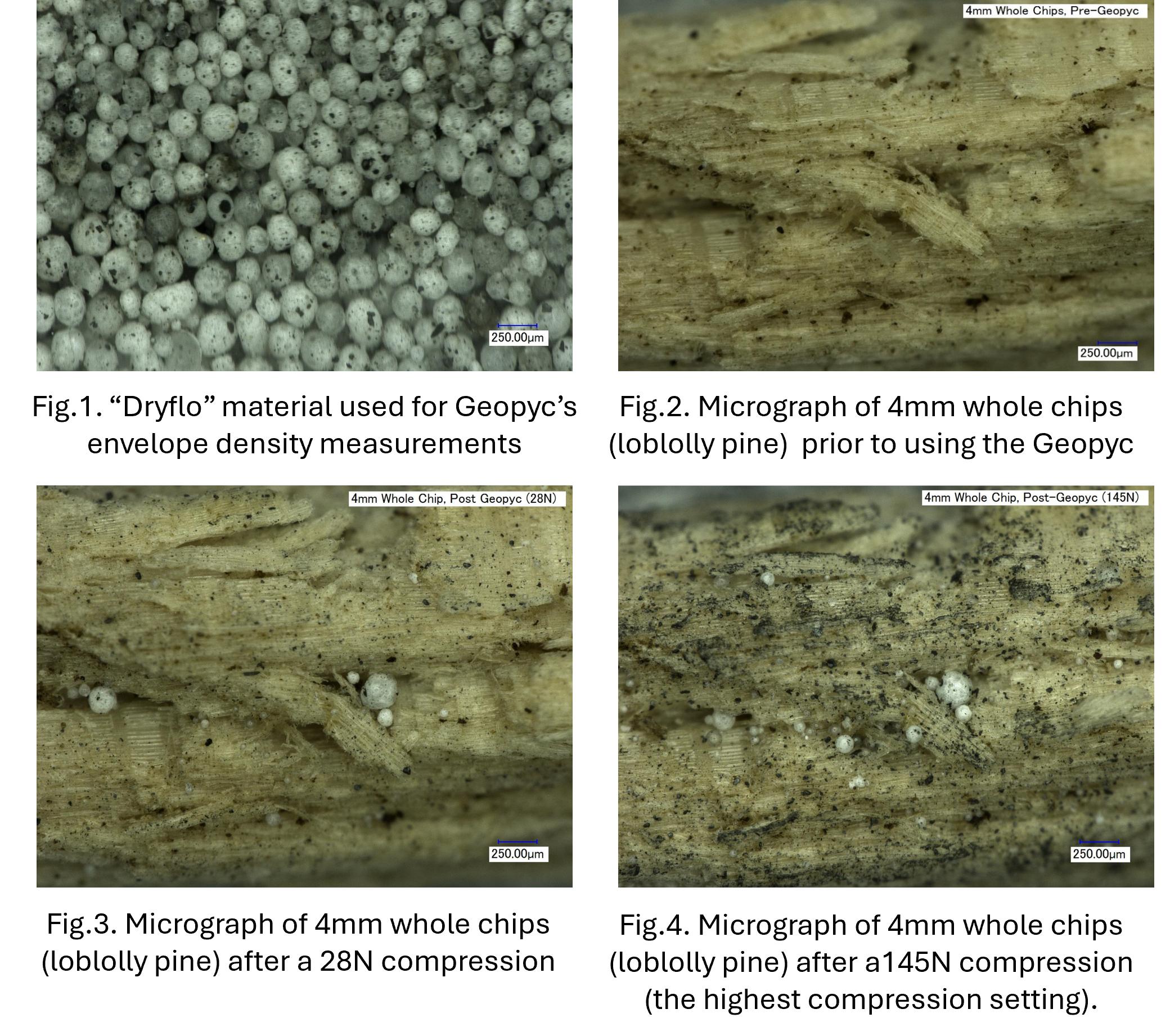
Envelope density: The Geopyc is an instrument used to determine the envelope density of solid materials. Envelope density refers to the density of a material, considering both its solid mass and the volume of the surface's outer boundaries, including any pores, cracks, or irregularities. The Geopyc operates by surrounding a sample with a fine granular material called "Dryflo," which fills in the spaces around the sample's exterior to accurately measure its volume without penetrating deeper into internal pores. The progression across the images shown, highlights the physical changes in the wood sample as it undergoes increasing compression, offering insight into the material’s response to different force settings.
Hopper flow: Hopper flow is critical to feed and transition feedstock through various unit operations in a biorefinery. These experiments use a wedge-shaped hopper at INL that is able to adjust inclination angle, and output discharge width and length. Flow performance is measured with a scale under the unit to record discharge rate and consistency, and these measures are typically compared against particle size and distribution, and feedstock type.
Associated publications:
https://doi.org/10.1021/acssuschemeng.2c05284
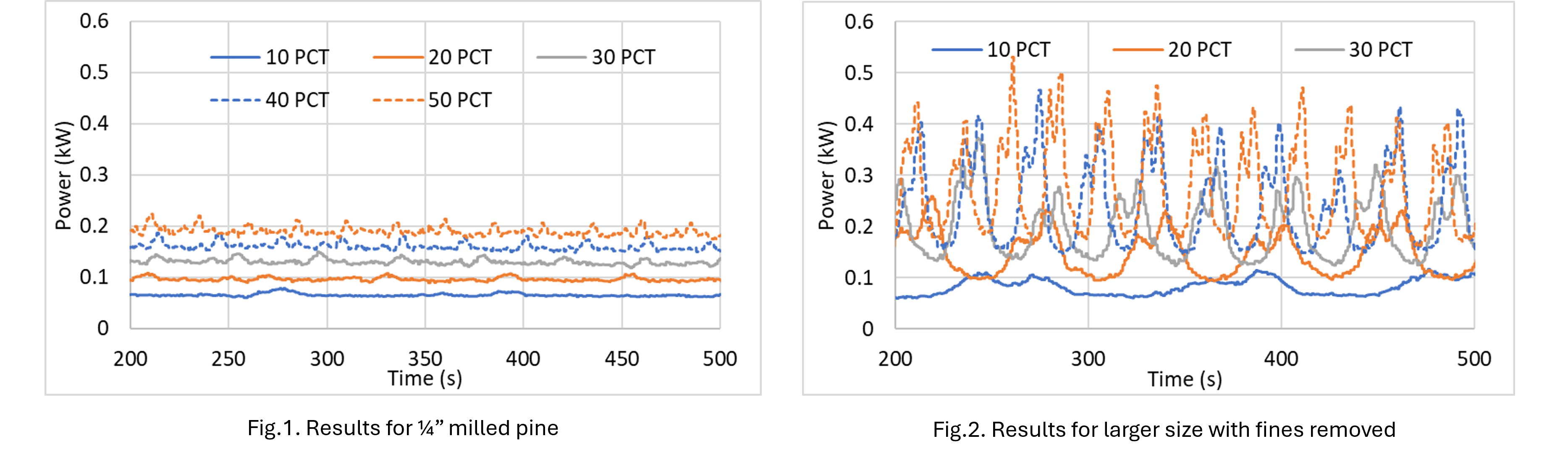
Auger power consumption: A configurable screw feeder at INL was used to interpret the feed performance of various pine samples. The performance was investigated as far as feed rate consistency and measured power consumption as a result of changes in torque on the feeder shaft. These differences are related back to particle sizes and size distributions of the feedstock. The solid blue, orange, grey, dotted blue, and orange indicate results at auger rotational speeds of 10, 20, 30, 40, and 50%, respectively.
Associated publications:
https://doi.org/10.3389/fenrg.2022.855289
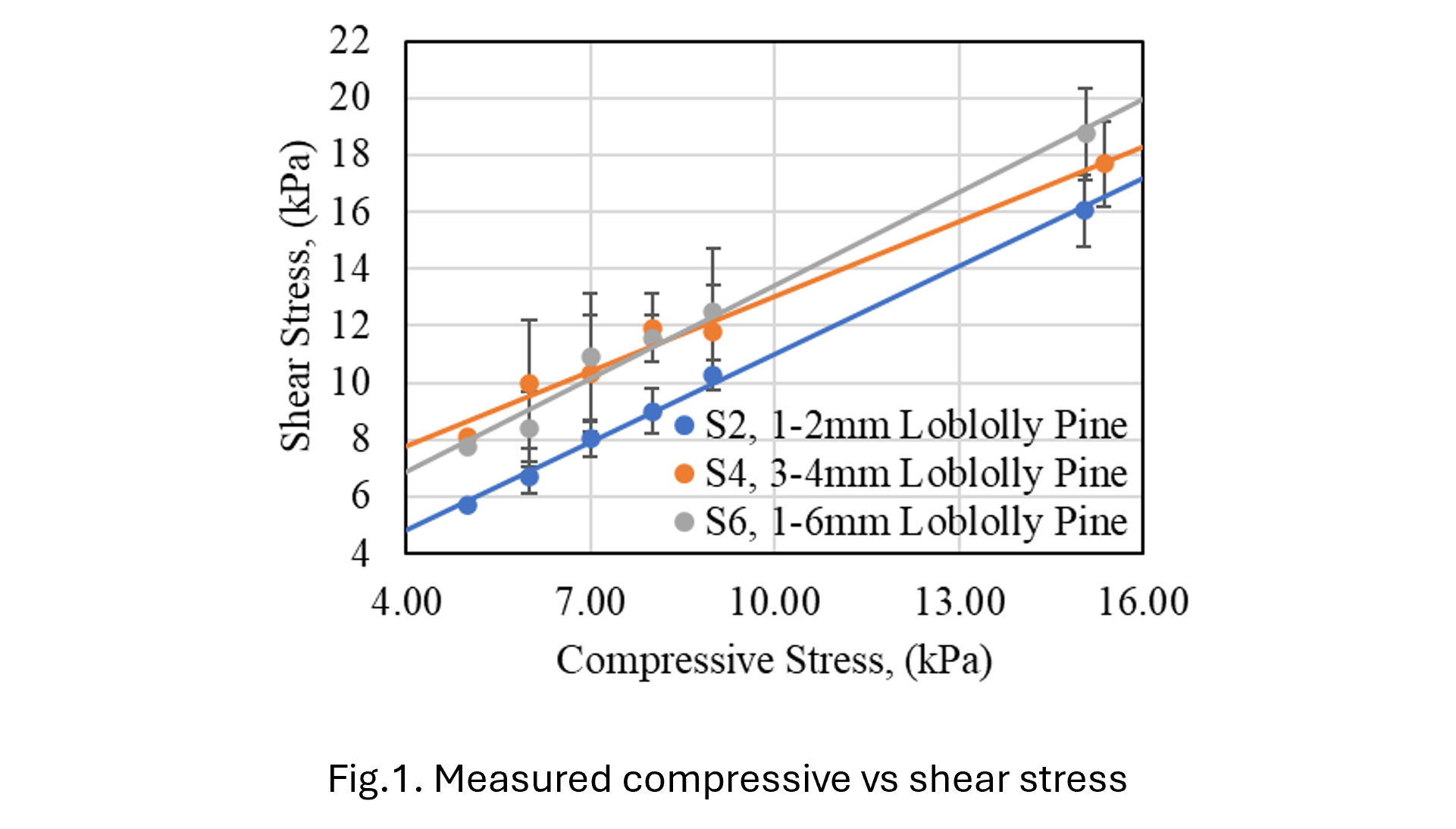
FT4 Rheometer: This tool measures the shear forces during flow of granular materials with a vane impeller and cup, with similar objectives to traditional granular shear testers such as the Schulze ring shear tester. These tests are performed as a series of changing consolidation stress conditions to extract a yield locus that relates the applied consolidation force to the resulting shear. From this yield locus, quasi material properties of internal friction and cohesion can be extracted while other flow performance indices can be calculated and inferred from these values, the major principal stress, and the unconfined yield stress through a Mohr's circle analysis.
Associated publications:
https://doi.org/10.3389/fenrg.2022.855289
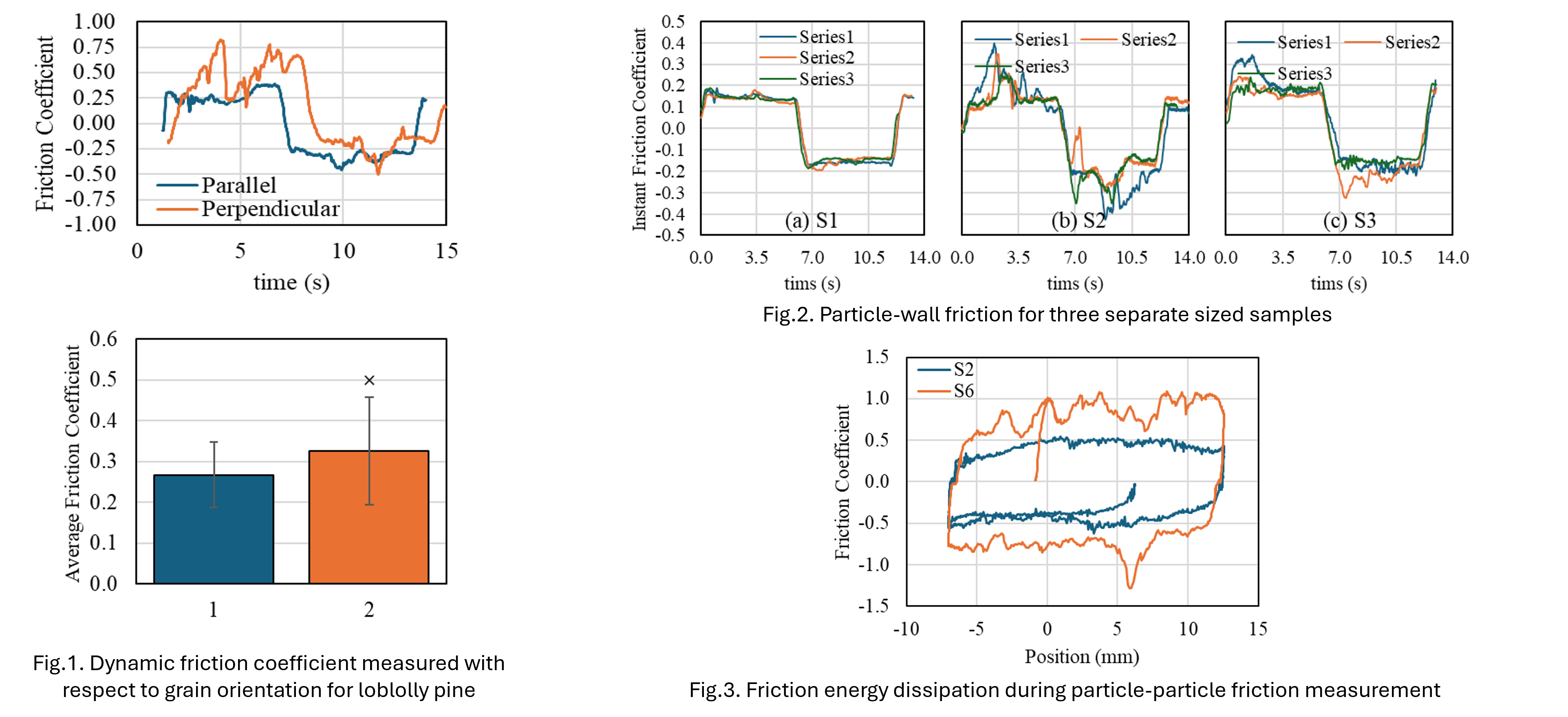
Tribometer: Tribometer measurements were performed to characterize the relevant friction measurements in the flowing granular system. These are useful to describe the energy dissipation through particle-particle and particle-wall interactions. This study looked at characterizing the friction with respect to: (1) grain direction, (2) particle-wall interactions for various particle sizes, (3) particle-particle interactions for various sizes.
Associated publications:
https://doi.org/10.3389/fenrg.2022.855289