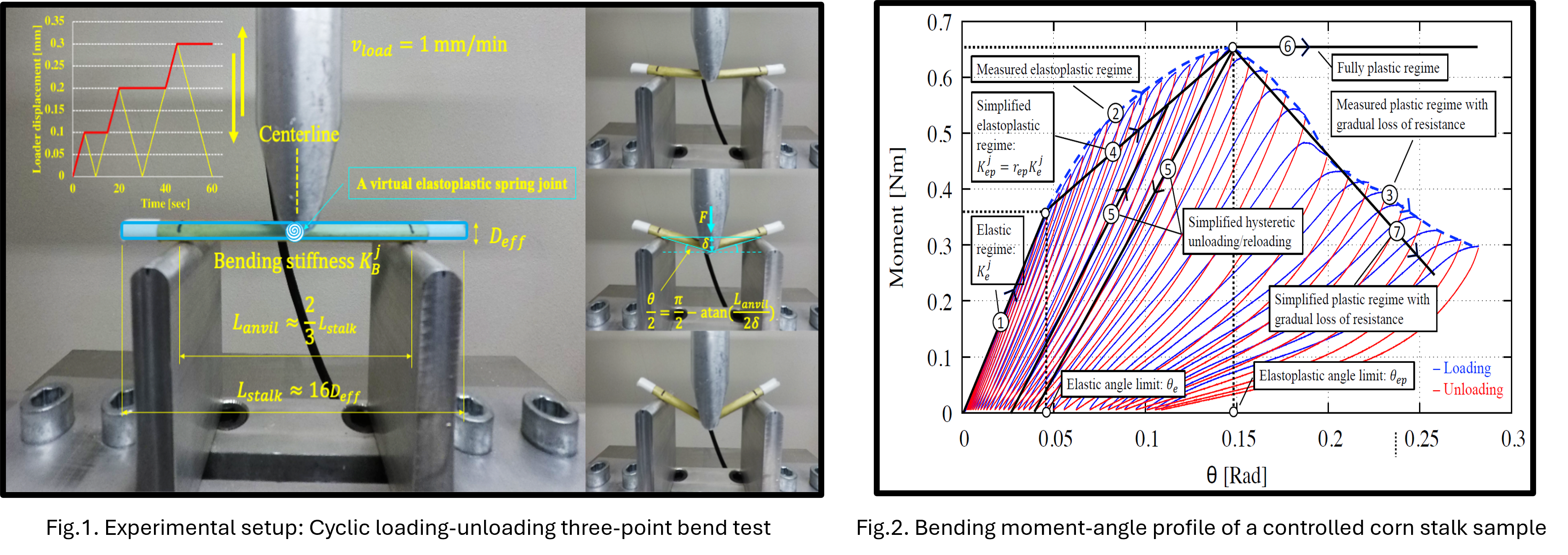
Strength and elastic properties of corn stalks: It is essential to study the fracture mechanics of corn stover, a major contributor for biofuels, for design of optimized comminution processes. This work presents a novel three-point cyclic bending-recovery experiment to characterize the elastoplastic flexural behavior of corn stalks. Mechanical properties determined in lab tests can be used as input to computational toolkits for predicting process parameters that affect power requirements and throughputs of comminution units.
Associated publications:
https://doi.org/10.1016/j.biosystemseng.2022.02.016
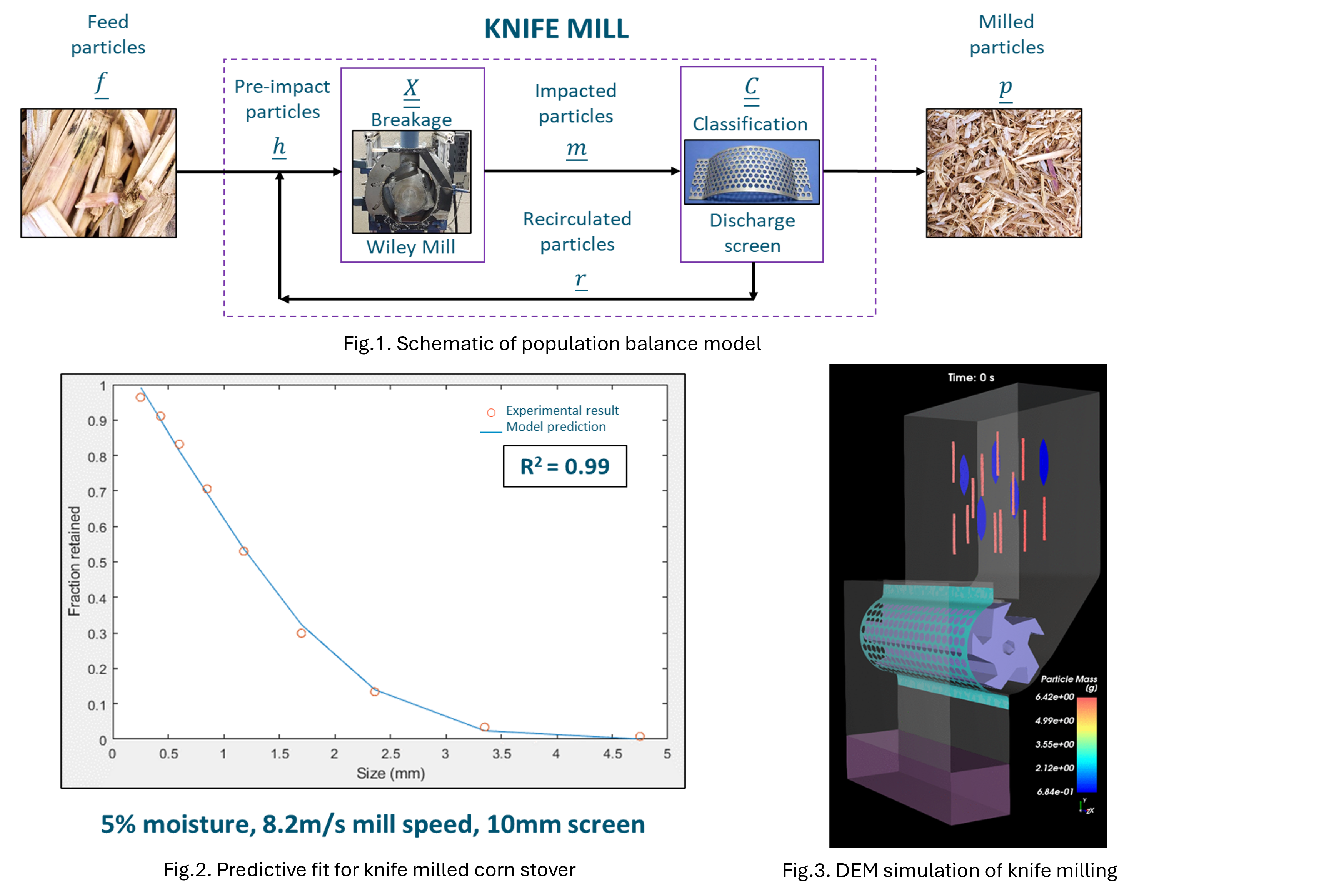
Population Balance Modelling for biomass comminution: In this work we develop a predictive population balance model for knife milling of corn stover stalks, based on a probability and breakage function to predict the milled particle size distribution as a function of variation in mill tip speed, moisture content, initial particle size, and retention screen size. These probability and breakage parameters are dependent on material properties like the fracture resistance and minimum specific energy. Batch scale experiments were used to determine material and mill parameters within the breakage law.
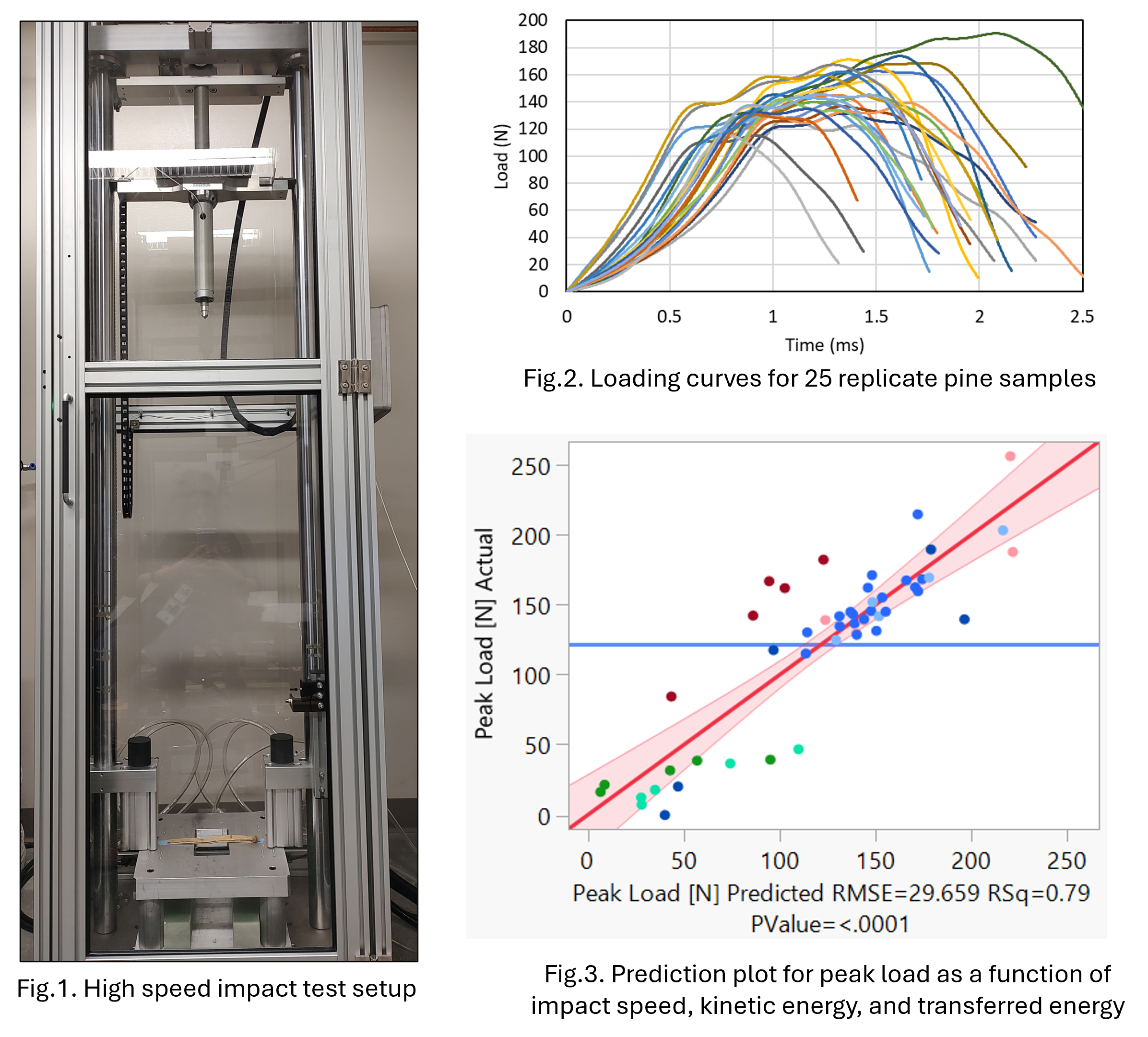
High Speed Impact Tests: In this study a high-speed drop tower was used to capture impact speeds and forces at very high frequency (2MHz) to determine the peak loading forces (forces to fracture) as well as impact duration, deflection, and amount of energy transferred and dissipated by pine samples. The plot below shows graphical results of Load vs Time for 25 samples tested.
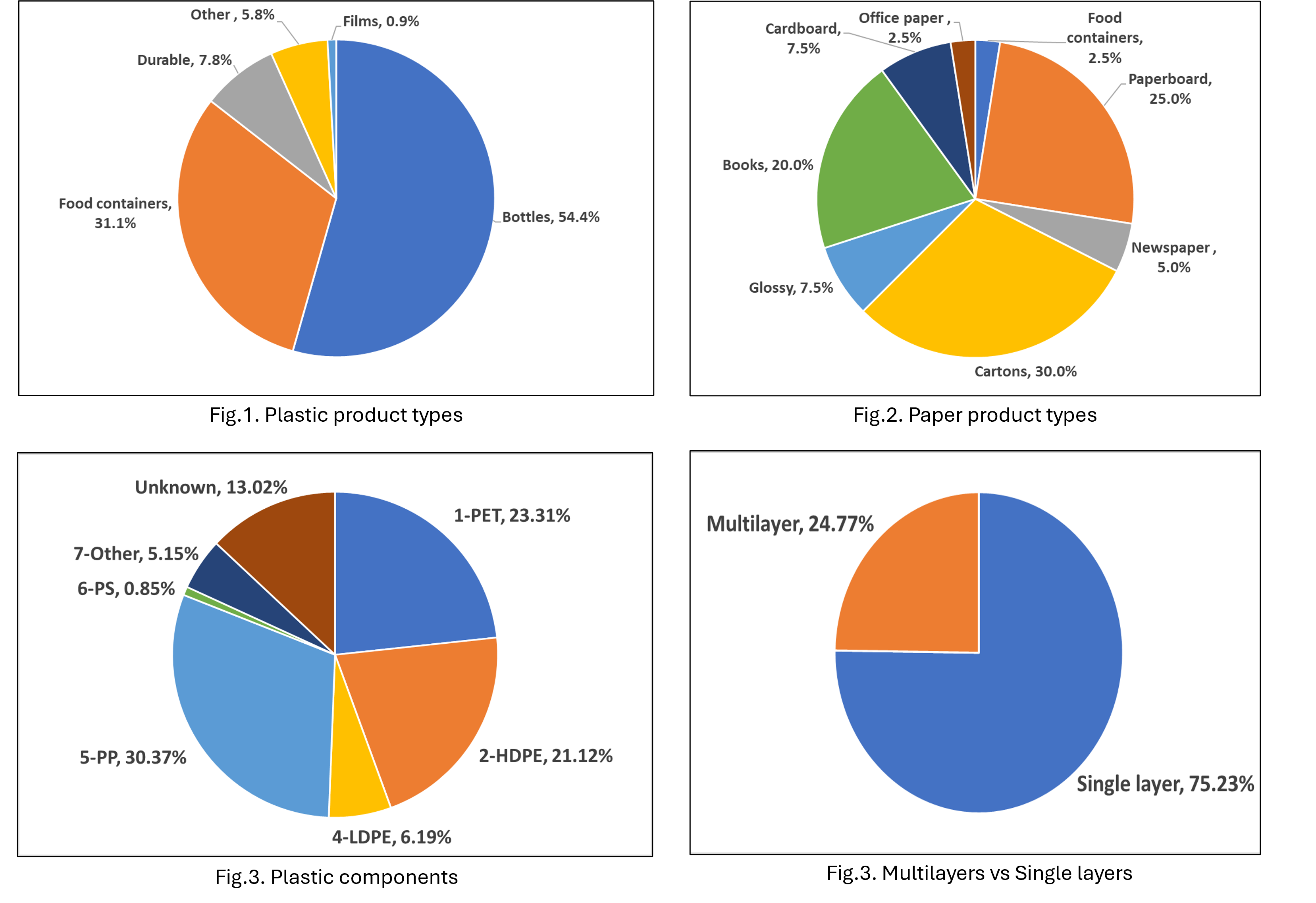
MRF Residue Analysis: In this study, the mass balance of MRF residuals received from Ann Arbor, Michigan was determined. Approximately 20 kg of paper and 25 kg of plastic was received, sorted and characterized.
Feedstock data for machine vision: Chemical composition of mock blends of anatomical fractions were performed. Data were used to train and validate machine vision model. These data are for Cob and Husk mixtures with blend ratios from 0 to 100.
Enzymatic Hydrolysis: In this study, artificial blends of corn stover husk and cob were DMR treated and hydrolyzed. The alkaline loading conditions used during pretreatment were 60 g NaOH/kg biomass and 80 g NaOH/ kg biomass. The refining severities used on the pretreated material ranged from 2,000 - 6,000 revolutions in a PFI mill. The percent glucose and xylose yields were calculated and used to develop a model for sugar yield prediction.