|
| 1023 | FCIC Task 2 - Feedstock Variability | This task meets the objectives of BETO by facilitating the drive to decarbonize the transportation and industrial sectors through research, development, and demonstration to produce cost-effective, sustainable aviation fuel. The industry lacks an understanding of the material and quality attributes, their magnitude, range, and distribution in available resources, as well as their impact on integrated feeding, preprocessing, conversion, and other strategic fuels. The fundamental knowledge and tools developed in this Task enable stakeholders to develop feedstock attribute-driven approaches to adjusting for variable feedstock quality and inform the selection of processes that manage variability from the field through conversion. In addition, this Task’s insights enable the valuation of feedstocks based on critical attributes.
Click on the 'File Count' entry to the right to view and download Task 2 data sets and summary information about Task 2.
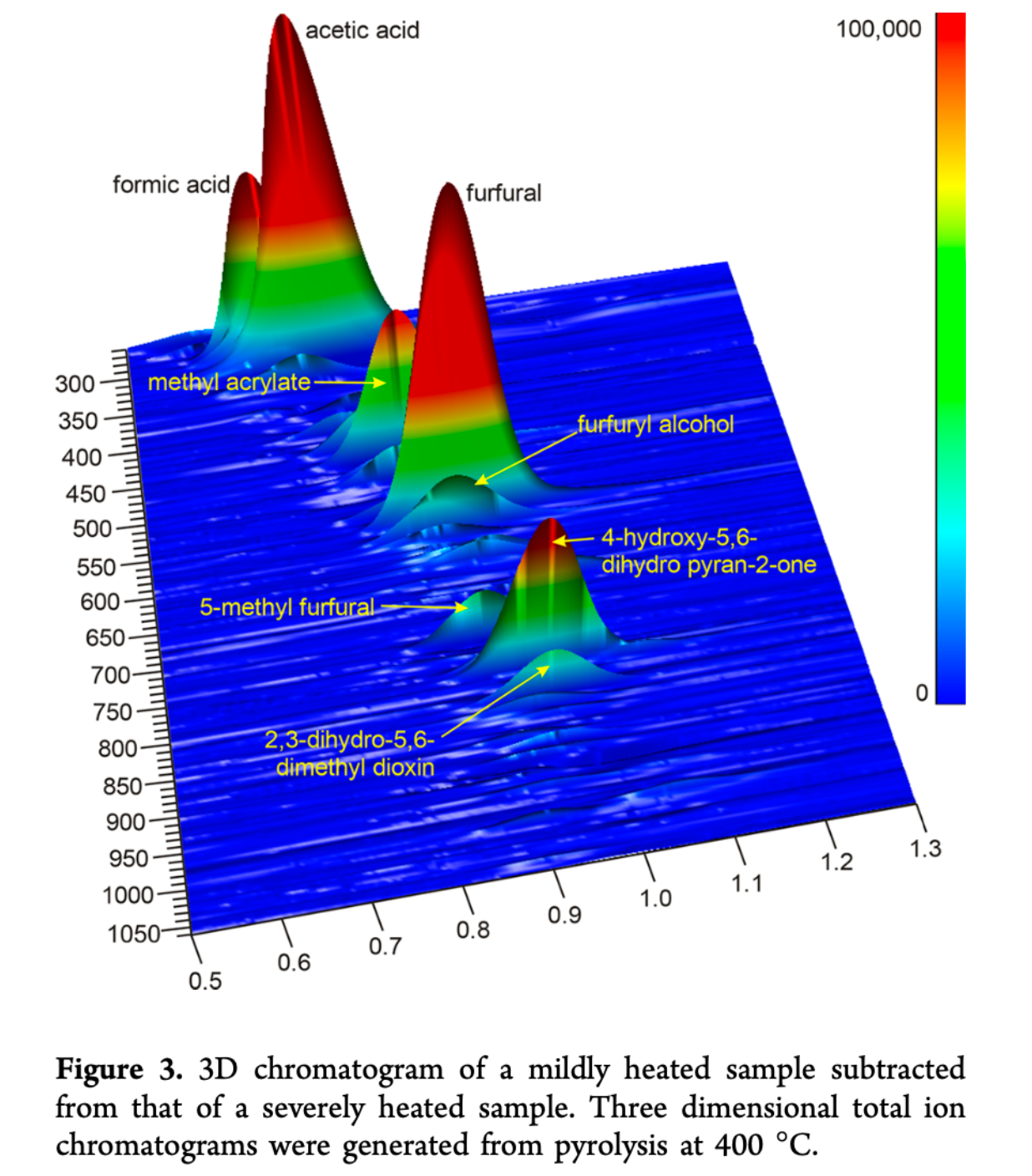
Biomass storage conditions are a major source of feedstock quality variability that impact downstream preprocessing, feeding, handling, and conversion into biofuels, chemicals, and products. Microbial activity in the stored biomass can result in heating that can modify or degrade the cell walls of the biomass, changing its characteristics. Analytical pyrolysis has been used to characterize biomass, but at temperatures typically used (~600°C), the differentiation of samples having different storage histories is subtle or nonexistent. In this study, lower-temperature (400°C) pyrolysis was used to show large differences in corn stover samples that had experienced different biological heating histories, indicated by pyrolysis products that were identified and, in several cases, quantified using two-dimensional gas chromatography/mass spectrometry. Pyrolysis of the samples originating from biomass that had experienced biological heating during storage generated small oxygenates such as furfural, 5-methyl furfural, and 2-(5H)-furanone with efficiencies that were as much as ten times greater than those measured for samples that were not significantly heated. Most of the pyrolysis products with enhanced efficiencies were C5 oxygenates, suggesting formation from hemicellulosic precursor polymers in the corn stover. The findings suggest that biological heating disrupts the cell wall structure, fragmenting the hemicellulose or cellulose chains and generating more polymer termini that have a higher efficiency in the generation of oxygenates at lower temperatures. Further, analytical pyrolysis conducted at lower temperatures may be a beneficial strategy for improved biomass cell wall characterization and the provision of insights to understand and manage the feedstock variability and inform harvest and storage best management practices.
See attached for full publication.
All figures in this page are from the attached publication.
Signatures of Biologically Driven Hemicellulose Modification Quantified by Analytical Pyrolysis Coupled with Multidimensional Gas Chromatography Mass Spectrometry
Gary S. Groenewold, Brittany Hodges, Amber N. Hoover, Chenlin Li, Christopher A. Zarzana, Kyle Rigg, and Allison E. Ray
ACS Sustainable Chemistry & Engineering 2020 8 (4), 1989-1997
DOI: 10.1021/acssuschemeng.9b06524
II. Figure 1
III. Experiment
Samples
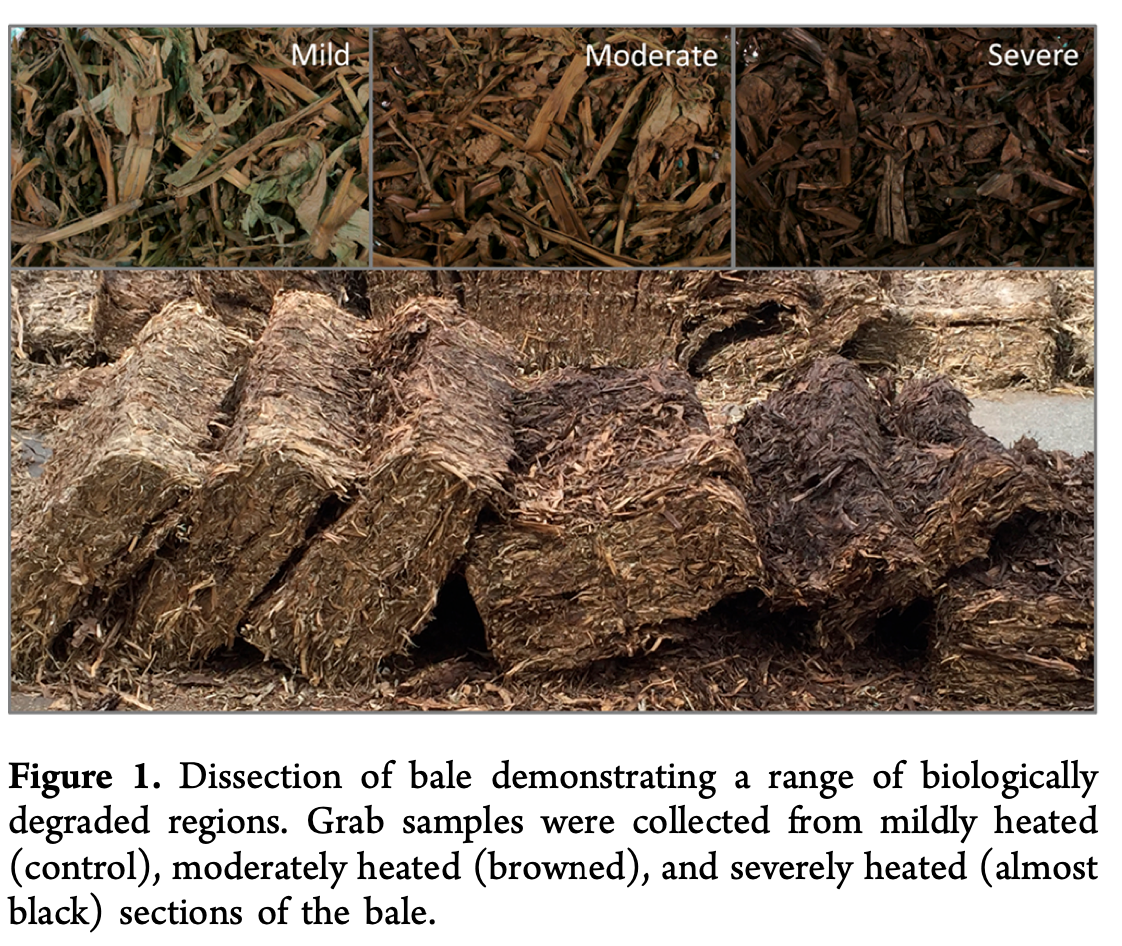
Corn stover bales were obtained from Story County, Iowa (harvest date 10/27/2017) and selected for evidence of degradation. A biologically degraded bale was identified for this study in order to evaluate the variability in structural polymeric attributes due to aging and degradation that occur during field-side storage. It was visually observed that some portions of the bale were moderately biologically heated (medium brown coloration) or severely biologically heated (dark brown to almost black) while some portions of the bale, typically near the edges of the bale, underwent only mild- or negligible biological heating (tan to light brown).
Sample Preparation
Samples were prepared for pyrolysis- GC×GC/MS analysis by weighing approximately 300 μg into a 38 mm pyrolysis tube fitted with a 19 mm (short) spacer (CDS Analytical, Oxford, PA) and a small glass wool plug. Once the biomass was in place on top of the plug, it was capped with a second glass wool plug and then spiked with 3 nanomoles of 9-(9H)-fluorenone, which served as an internal standard for the analysis. The fluorenone was injected into the plug as 1 μL of a 3 mM solution in acetonitrile.
Pyrolysis
Pyrolysis was conducted using a CDS Analytical 5250 pyrolyzer unit, which is equipped with a 36-sample carousel that enables analysis of batches of sample tubes. The samples were dropped into the pyrolysis chamber, initially subjected to a 2 s drying time at 100°C, and then held for an additional second at 100°C. The temperature was then ramped at 50°C/second to the maximum pyrolysis temperature (Tmax) and then held at Tmax for 5 s. The sample tube was then ejected, and the chamber was cleaned by being heated to 1200 °C for 10 s.
GC×GC Separation
Two-dimensional gas chromatography was conducted using an Agilent (Santa Clara, CA) 7890 gas chromatography modified for GC×GC by a four jet modulator and a secondary oven, both located within the primary oven. The first chromatographic dimension used a 28 m 0.25 mm i.d. column with a 0.5 μm Rxi-5 ms (Restec, Bellafonte, PA) stationary phase, which is 5% diphenyl/95% dimethyl polysiloxane. The second chromatographic dimension used a 1 m, 0.1 mm i.d. column with a 0.1 μm Rxi-17 (Restec, Bellafonte, PA) stationary phase, which is 50% diphenyl/50% dimethyl polysiloxane.
MS Detection
Mass spectrometry detection and analysis were conducted using a Leco Pegasus 4D instrument (St. Joseph, MI), which integrates a time-of-flight mass spectrometer with the Agilent 7890 GC. An acquisition delay of 220 s was employed to allow very light compounds to pass through the MS before analysis was initiated. The instrument was scanned from m/z 43 to 300 at a rate of 200 spectra/second. The fast scan rate enables the deconvolution of closely eluting compounds. The electron impact ion source was operated at 250 °C, with an ionization energy of 70 V.
Data Processing, Compound Identification, and Quantification.
Mass spectral data pertinent to a given compound were deconvoluted using the Leco ChromaTOF software, using automatic smoothing and a baseline offset value of 1.0, which correlates to just above the spectrometer noise level. Deconvoluted mass spectra were searched against the NIST and Wiley mass spectral libraries, and identification was based on forward and reverse similarity indices, probability,24 and the judgment of the analyst.
Compositional Analyses.
Structural and extracted sugars were measured according to National Renewable Energy Laboratory analytical procedures.25 Samples dissected from one bale were ground to pass a 2 mm sieve. Extractable sugars were measured prior to an acid hydrolysis step (generating values for monomeric sugars) and after an acid hydrolysis step (generating monomeric + oligomeric sugars).
IV. Result and Conclusion
Corn stover biomass subjected to biological heating undergoes cell wall structure modification resulting from hemicellulose and cellulose breakdown that is observable in enhanced pyrolysis efficiency for the production of small oxygenates such as furfural-, furanone-, and pyranone-derivatives. The pyrolysis efficiency differences between the mildly heated, moderately heated, and severely heated samples are readily observable when the pyrolysis analyses are conducted at 400 °C but are not obvious at higher pyrolysis temperatures. Most of the compounds that are enhanced in the analyses of the moderately heated and severely heated samples are C5 oxygenates, suggesting that the pyrolysis products may be formed from hemicellulosic precursor polymers in the corn stover, consistent with the wet chemical analysis that showed degradation of structural xylan. Cellulosic precursors are likely also involved, although probably not to the same extent as the hemicellulose. The fact that pyrolysis efficiency in the moderately heated and severely heated samples is so high may indicate that the microbial heating fragments the hemicellulose and cellulose chains, generating more polymer terminal groups that are responsible for higher pyrolysis efficiency at lower temperature.
V. Figure 3
Overview
Drought-stressed (DS) Zea mays (known throughout the Midwest commonly as corn) will be challenged to produce stover of typical masses, compositions, and densities. Typically, DS corn is shorter in plant height and exhibits higher ratios of vascular tissues in stems and leaves relative to other cell types, in addition to greatly reduced grain yields. As such, the objective of this milestone is to understand the impact of the drought-stressed corn stover on downstream pretreatment including dilute acid, DMR, and RCF. In addition, two major types of air classified anatomic fractions – cobs and stalks, along with its original non-classified corn stover from both non-drought (ND) and DS corn stover – were tested for enzymatic digestibility through three types of pretreatments. To some surprise (relative to our expectations), all anatomic fractions of DS corn stover were found to have similar biomass digestibility compared to the same from ND corn stover for all pretreatment methods. For example, DMR pretreatment shows > 80% glucose and xylose yield with 10 mg total protein/g of cellulose for both ND and DS corn stover.
Highlight: We showed that the DS corn stover (in bulk or as fractionated by air classification) is essentially similar as ND corn stover with respect to biomass digestibility, variation of digestibility between the anatomical fractions is preserved.
Figures
List of Publications in FY19
The list of publications on degraded corn stover for fiscal year 2019 (FY19) is as follows:
-
Ray, A. E., et al. "Multiscale Characterization of Lignocellulosic Biomass Variability and Its Implications to Preprocessing and Conversion: a Case Study for Corn Stover." ACS Sustainable Chemistry & Engineering, https://doi.org/10.1021/acssuschemeng.9b06763
-
Li, C., et al. "Characterization and Localization of Dynamic Cell Wall Structure and Inorganic Species Variability in Harvested and Stored Corn Stover Fractions as Functions of Biological Degradation." ACS Sustainable Chemistry & Engineering, https://doi.org/10.1021/acssuschemeng.9b06977
-
Ding, L., et al. "Image Analysis for Rapid Assessment and Quality-Based Sorting of Corn Stover." Frontiers in Energy Research, https://doi.org/10.3389/fenrg.2022.837698
-
Groenewold, G. S., et al. "Signatures of Biologically Driven Hemicellulose Modification Quantified by Analytical Pyrolysis Coupled with Multidimensional Gas Chromatography Mass Spectrometry." ACS Sustainable Chemistry & Engineering, https://doi.org/10.1021/acssuschemeng.9b06524
-
Bose, E., et al. "Impacts of Biological Heating and Degradation during Bale Storage on the Surface Properties of Corn Stover." ACS Sustainable Chemistry & Engineering, https://doi.org/10.1021/acssuschemeng.0c03356
-
Leal, J. H., et al. "Impacts of Inorganic Material (Total Ash) on Surface Energy, Wettability, and Cohesion of Corn Stover." ACS Sustainable Chemistry & Engineering, https://doi.org/10.1021/acssuschemeng.9b06759
Overview of FY23 Campaign
Municipal solid waste (MSW) can be a cost-effective and readily available raw material to produce fuels and products. The diverse nature of MSW attributes, including chemical composition and physical and biological attributes, poses a substantial obstacle to its practical usage. Utilizing nonrecycled waste materials offers a promising approach to transform the value of municipal solid waste (MSW) from being disposed of and causing environmental problems to becoming a potential resource. This can be achieved by developing advanced technologies that improve waste management and recycling systems and by creating a financially viable and high-quality raw material to produce bioenergy and bioproducts. This study aimed to establish the basic quality features and compositions to facilitate the planning of appropriate preprocessing technologies and their corresponding performance metrics for conversion. This endeavor primarily focused on the qualitative attributes of moisture content, chemical composition, and inorganics.
Overview
The MRF residues were pyrolyzed at 500°C and the pyrolysis vapors were analyzed with a GC. These data show the compounds detected in the pyrolysis vapors of the three MRF residue samples (as-received, paper-rich, and plastic rich) each size reduced to 4 mm.
| NREL: Bryon Donohoe, Yining Zeng; LANL: Benjamin Davis, Ricardo Navar; LBNL: Ning Sun, Chang Dou, Xihui Kang; SNL: Kenneth Sale, Yooli Light; INL: Ling Ding, Wenqi Li. Former Members - INL: Allison Ray, Amber Hoover, Kuan-Ting Lin; LANL: Troy Semelsberger, | True |
20
|
15
|
0
|
4
| False |